

Who should enter the ‘Best Use of AI for Healthcare’ category?
The “Best Use of AI for Healthcare” award recognizes innovative applications of artificial intelligence (AI) that significantly impact the healthcare industry, improving patient outcomes, enhancing clinical decision-making, and driving operational efficiencies.
At a time of rising healthcare costs, an aging population, and increasing demands on healthcare systems, AI has emerged as a transformative force in driving efficiency, precision, and innovation across the healthcare sector.
AI-powered healthcare solutions offer advanced capabilities for analyzing vast amounts of medical data, detecting patterns, predicting outcomes, and personalizing treatment plans, thereby enabling healthcare providers to deliver more effective and personalized care.
From diagnostics and treatment planning to administrative tasks and patient engagement, AI-driven solutions are reshaping the future of healthcare delivery.

Example Use Cases
Uses of AI within healthcare are constantly increasing as new breakthroughs are made. Here are some examples of applications from previous entries.
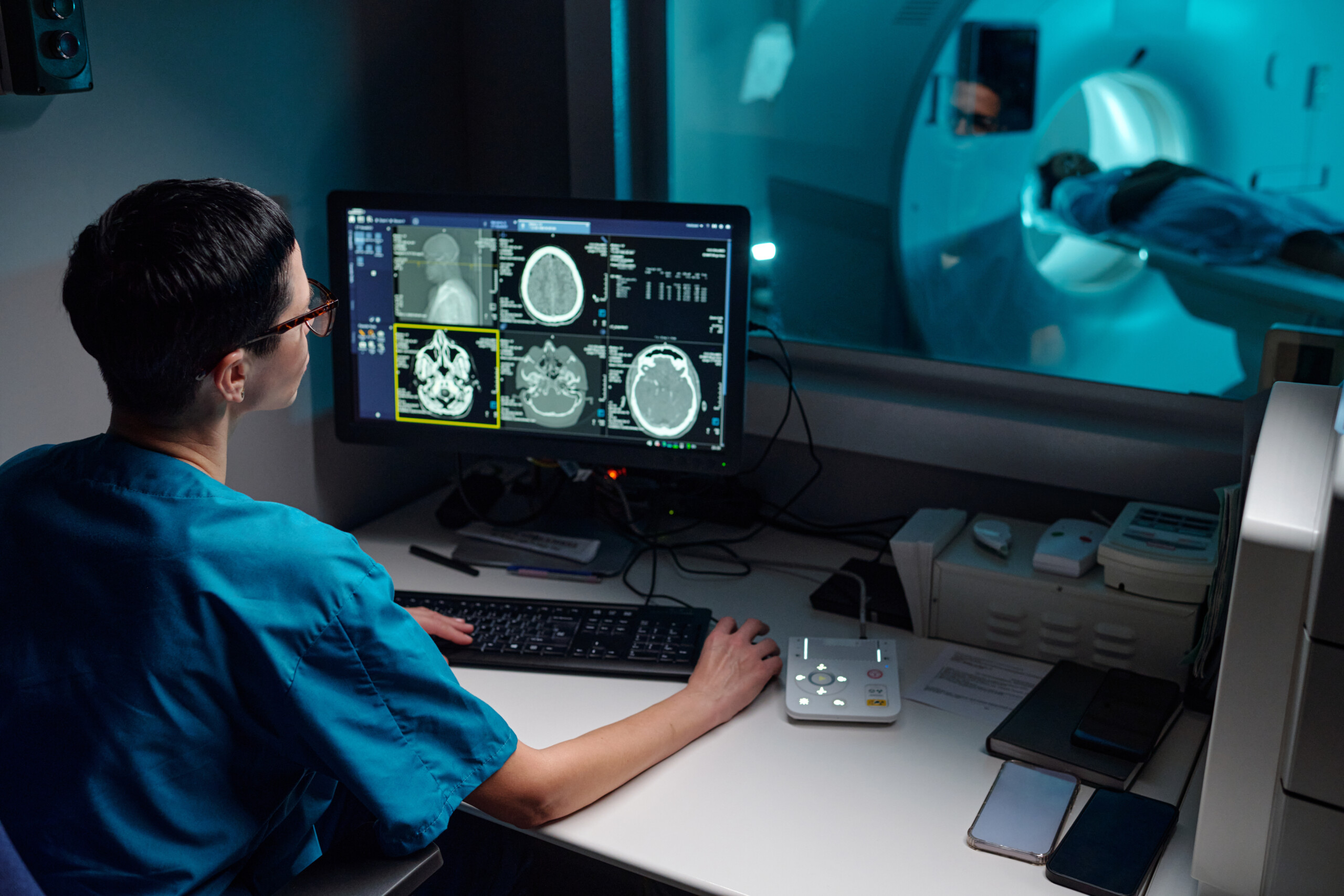
AI-powered medical imaging solutions utilize deep learning algorithms to analyze medical images such as X-rays, MRIs, and CT scans. These assist radiologists in diagnosing diseases and detecting abnormalities.
Healthcare providers can store, manage, and analyze medical imaging data securely in the cloud, facilitating rapid diagnosis and treatment planning.

AI-driven clinical decision support systems (CDSS) leverage machine learning algorithms to analyze patient data, electronic health records (EHRs), and medical literature. They provide evidence-based treatment recommendations and alerts to healthcare providers.
These systems help clinicians make informed decisions, avoid medical errors, and improve patient safety.

Predictive analytics models powered by AI algorithms enable healthcare organizations to forecast patient outcomes, identify high-risk individuals, and intervene proactively to prevent adverse events.
They analyze patient data, including demographics, medical history, and health trends, to predict outcomes such as hospital readmissions, complications, and mortality rates. They can provide personalized interventions to improve care coordination and reduce readmission rates.

Optimizing healthcare operations by automating administrative tasks, streamlining workflows, and improving resource allocation. Using AI and machine learning to optimize hospital workflows, improve imaging efficiency, and enhance patient throughput.
Refines staff schedules, operating room utilization, and bed management, ensuring efficient use of resources and minimizing wait times for patients.

Remotely monitors patients’ vital signs, symptoms, and medication adherence using wearable devices and IoT sensors.
AI algorithms analyze patient-generated data in real-time, detect anomalies, and alert healthcare providers to potential health issues. AI-powered telemedicine platforms facilitate virtual consultations, remote diagnosis, and treatment planning, improving access to care for patients in underserved areas.
Hall of Fame: Previous Winners


Areas to Highlight in Your Submission
Judges score nominations across these five key areas:
Although not formally scored, focus on these areas specific to this category, can help your nomination stand out:
More A.I. Awards Categories
Next Steps to Enter The A.I. Awards
To enter this AI Awards category, or any other category in The AI Awards, please follow these three simple steps:
The A.I. Awards is a program from The Cloud Awards. Since 2011, we’ve been helping organizations across the globe gain the recognition they deserve for market-leading innovation in the cloud computing and software sectors.
For a detailed breakdown of all the benefits you receive as an awards entrant as either a shortlistee, finalist or ultimate winner, please see our “Why Enter?” page. The many benefits are replicated across all international awards programs. If you have any questions about this category, please contact us.