By Kevin Beasley, CIO at VAI Cloud, LLC. VAI Cloud were finalists in the ‘Best SaaS Security Solution’ awards at the 2026 Security Awards.
For years, ERP evaluations have largely centered on functionality. Can the system manage inventory? Does it support financials, purchasing, sales, manufacturing or distribution? Is it easy for employees to use? Can it integrate with other business applications?
Those questions still matter. But there is another question that has moved much higher on the list: How secure is the ERP system and the data it manages?
As ERP systems become increasingly connected, cloud-enabled and intelligent, cybersecurity can no longer be treated as an IT consideration that comes after the software decision has been made. It is becoming a core business requirement and a leading decision-maker in selecting an ERP platform.
An ERP system sits at the center of an organization’s operations and contains some of its most valuable information. Financial data, customer records, supplier information, pricing, inventory, employee information, intellectual property and other sensitive business data may all reside within or move through the ERP environment.
A system can have all the right features and still create significant business risk if security, resilience and recovery are not built into the overall solution.
Security Has Become an ERP Requirement
Historically, organizations could think of ERP functionality and cybersecurity as somewhat separate considerations. The ERP system handled the business processes, while IT security tools protected the surrounding infrastructure. That separation is no longer best practice.
Modern ERP environments are connected to users, customers, suppliers, e-commerce platforms, mobile devices, third-party applications, cloud services and other systems. The more connected an ERP environment becomes, the more important it is to understand how data is protected at every point of access and throughout its lifecycle.
That means security should be evaluated alongside functionality from the beginning of the ERP selection process.
Organizations should ask questions such as:
- Where is our ERP data stored?
- Who has access to it?
- How is user access controlled?
- Can access be restricted based on roles, locations or other policies?
- How is sensitive information protected?
- What happens if data is accidentally deleted or corrupted?
- What happens if systems become unavailable?
- How quickly can operations be restored?
- What happens in the event of a ransomware attack or other security incident?
- Who controls the infrastructure and the data?
- Does the ERP environment provide the security capabilities needed to support current and future business requirements?
These are no longer simply questions for the IT department. They can directly affect business continuity, regulatory obligations, financial risk and an organization’s ability to operate.
Data Sovereignty: Knowing Where Your Data Is
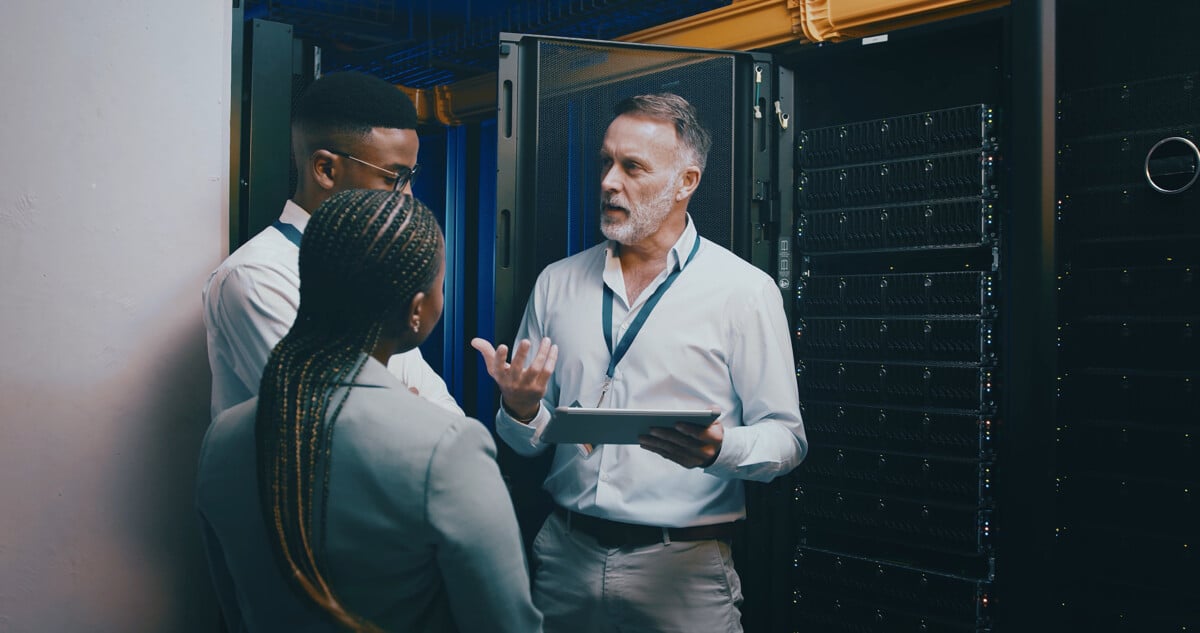
One increasingly important consideration is data sovereignty, knowing where business data is stored and understanding who has control over that environment.
Moving an ERP system to the cloud can provide significant benefits, including scalability, accessibility and reduced infrastructure management. But “cloud” should not automatically mean that an organization gives up visibility or control over its data environment.
Organizations should understand where their ERP data resides, how it is protected, who can access the infrastructure and what policies govern that data. For businesses operating in regulated industries or handling sensitive customer, financial or operational information, these considerations can become a requirement.
Data sovereignty is ultimately about more than geography. It is about control, visibility and accountability.
When evaluating an ERP provider, organizations should understand the provider’s approach to data storage, access, security, backup and recovery, and how those policies align with the organization’s own requirements.
Modern Access Control: Security Without Unnecessary Exposure
Another major consideration is access control. The question is no longer simply whether an employee can log into the ERP system. Modern security requires organizations to consider who can access what data, when and where they can access it, and what they are permitted to do with that information.
Not every employee needs access to every ERP function or every piece of data. As an example, a warehouse employee, sales representative, financial manager and system administrator may all use the same ERP platform, but their responsibilities, and therefore their access requirements, are very different. Modern access control policies can help organizations follow the principle of least privilege, providing users with the access necessary to perform their jobs without unnecessarily exposing sensitive information.
Multi-factor authentication (MFA) is another important layer of protection, and in many cases, mandated. Requiring more than a username and password can significantly strengthen the authentication process and make compromised credentials less useful to attackers.
The goal is not simply to make ERP access more difficult. It is to make access more controlled, more deliberate and more secure.

Resilience Must Include Cybersecurity
The growing threat of ransomware and other cyberattacks has also changed the way organizations should think about business continuity. Traditional disaster recovery planning often focused on events such as hardware failure, power outages or natural disasters.
Today, organizations must also consider the possibility that their systems could be deliberately compromised. That makes cybersecurity and resilience increasingly interconnected.
An ERP environment should be designed not only to prevent unauthorized access but also to limit the impact of an incident and support recovery if prevention fails. This can include multiple layers of protection, from secure authentication and access controls to network security, data protection, monitoring, backup strategies and recovery capabilities.
No single security technology can eliminate every risk. Instead, organizations need a layered approach that assumes threats will continue to evolve.
Has Convenience Taken a Back Seat?
For years, technology decisions often involved a balancing act between security and convenience. Users wanted systems that were fast, simple and easy to access. Additional authentication steps, restricted permissions or security policies could sometimes be viewed as obstacles to productivity.
That mindset is necessarily changing. Today, security has to come before convenience.
That does not mean ERP systems should be difficult to use. In fact, the best solutions should provide strong security while maintaining a positive user experience. Modern security technologies can make authentication and access controls more seamless without compromising protection.
But convenience should not determine whether appropriate security measures are implemented. An employee may prefer to use a simple password. A business may prefer unrestricted access. A system administrator may prefer fewer controls. Those preferences can no longer outweigh the potential consequences of compromised credentials, unauthorized access or lost business data.
The objective should be to build security into the user experience rather than treating security as something users have to work around.
Security Should Be Part of the ERP Scorecard
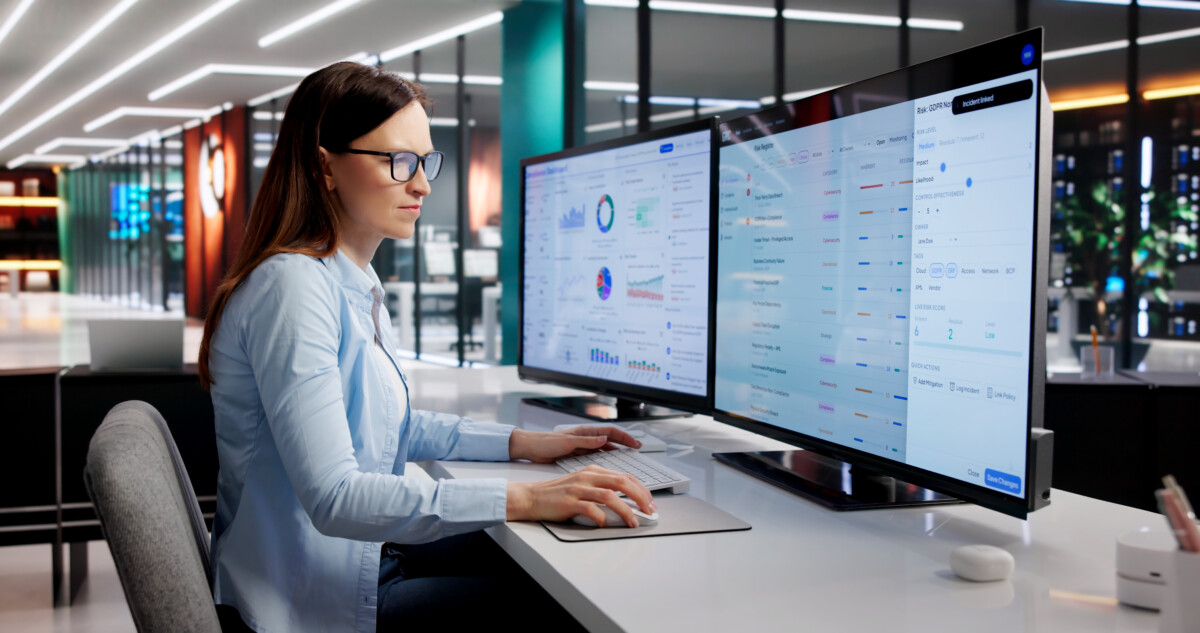
When evaluating a new ERP system, organizations have traditionally created scorecards based heavily on functionality, integration capabilities, usability, scalability and cost. Cybersecurity deserves a place on that scorecard.
Security should be evaluated alongside the capabilities that initially attract an organization to an ERP platform. A feature-rich system is of limited value if the data supporting those features is not adequately protected or if the organization cannot recover when something goes wrong.
The evaluation should consider the entire environment: authentication, access controls, data protection, infrastructure security, data sovereignty, high availability, disaster recovery, backup and recovery procedures, monitoring and overall resilience. It should also consider how those capabilities will evolve as the organization grows.
The Bottom Line
Cybersecurity is no longer simply an IT issue, and it should no longer be an afterthought in ERP selection. ERP systems are foundational to modern business operations. They hold critical data, support essential processes and connect organizations to an increasingly complex digital ecosystem.
That makes security, resilience and recovery fundamental characteristics of a modern ERP solution. Functionality will always matter. Usability will always matter. Cost and scalability will always matter. But the question organizations should increasingly ask is not just “Can this ERP system do what we need it to do?”
It is also:
“Can it do it securely and can our business keep operating if something goes wrong?”
As cyber threats continue to evolve and businesses become increasingly dependent on their digital infrastructure, cybersecurity is moving from a supporting consideration to a core ERP decision criterion.
The ERP decision is no longer just about choosing the system with the right features. It is about choosing a platform that can help protect the business, its data and its ability to keep operating.
About the Author: Kevin Beasley