By Vijay Nair, Head of Marketing, Alliances and Growth at Gramener – A Straive Company. Gramener was shortlisted for the ‘Best Use of AI in Transportation and Logistics‘ and ‘Best AI-driven Automation Solution‘ categories at The 2024 A.I. Awards.
Generative AI, tracing its origins to the 1950s with pioneers like Alan Turing and John McCarthy, took a significant leap with the introduction of Generative Adversarial Networks (GANs) by Ian Goodfellow and his team in 2014.
The concept gained massive popularity with the emergence of ChatGPT in 2023, quickly becoming a hot topic. Powered by Large Language Models (LLMs), Natural Language Processing (NLP), and Machine Learning (ML), GenAI can analyze and create extensive text and images based on user prompts. This blog explores key Generative AI trends and their impact on various industries.
A Quick Recap of GenAI in 2023-24
The Generative AI market is forecasted to reach a market size of $66.62 billion by 2024 and is projected to grow at an annual rate of 20.80% from 2024 to 2030, reaching US$207.00 billion by 2030.
In 2023, Generative AI became a big deal. It’s like having smart robot helpers. For example, ChatGPT from OpenAI can help with writing and finding information, and understanding what you ask well.
GPT-4 is an updated version of ChatGPT, able to write better and understand more by reading even images. Then there’s DALL·E, also by OpenAI, which can turn your words into pictures.
From generating text content to creating graphics, videos and even business presentations – That’s how Generative AI has evolved in the last year.
Here are the top Generative AI trends for 2025 you should look out for.
AI for Creativity
The AI tool Dall-e introduced numerous unexpected capabilities, marking the first instance of an AI-generating artwork from minimal inputs. While its initial version struggled to produce high-quality art, its current iteration has significantly improved, closely aligning with user requests.
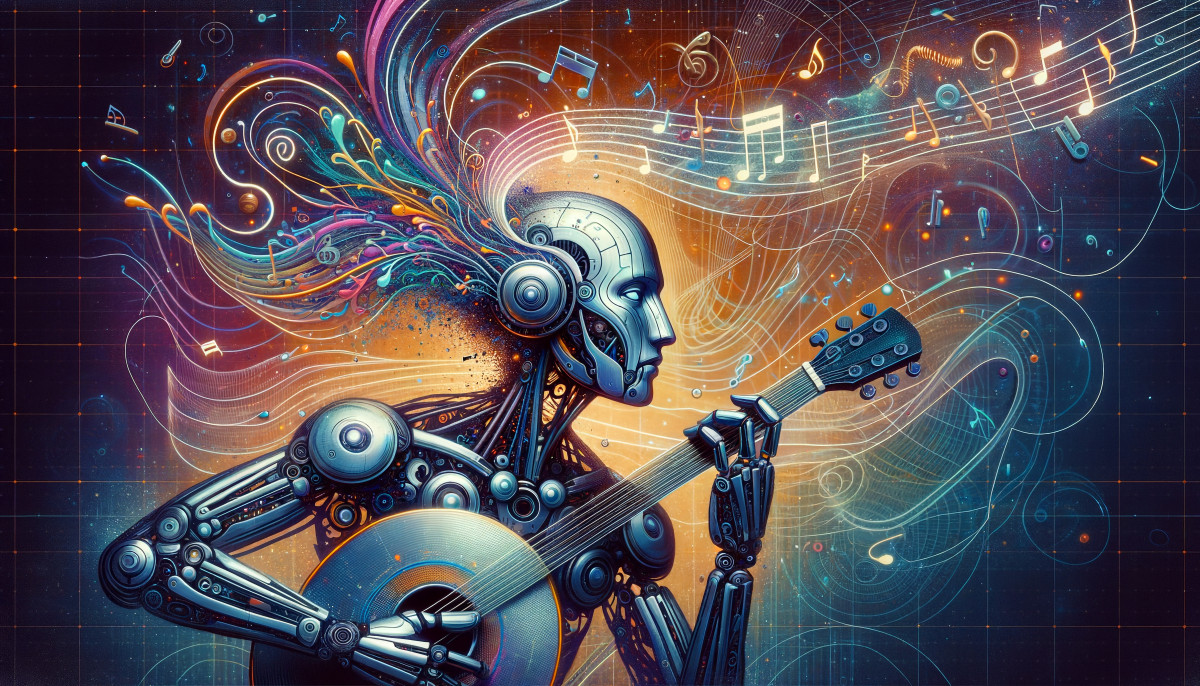
Beyond visual art, the capabilities of such AI tools extend to generating real-time animations, music, and audio for a wide range of applications. This area is poised for ongoing expansion, empowering musicians, songwriters, artists, sound effects specialists, and everyday users to fully leverage generative AI technologies for creative expression.
An example of GenAI for creativity is AI-assisted music composition. Several platforms like Aiva and OpenAI’s MuseNet already provide AI tools that assist musicians in composing original pieces of music.
GenAI for Hyper-Personalization
Hyper personalization is one of the significant Generative AI trends impacting on industries like pharma, manufacturing, retail & CPG, and logistics. The trend of leveraging Generative AI for personalization is rapidly transforming how businesses interact with their customers, offering highly customized experiences that cater to individual preferences and behaviors.
This personalization extends across various sectors, from e-commerce to entertainment, where AI algorithms analyze vast amounts of data to predict and adapt to user preferences.
Duolingo uses Generative AI to personalize the learning experience for each user, dynamically adjusting the difficulty, content, and feedback based on the learner’s progress, mistakes, and preferences.
Conversational AI
In 2025, Conversational AI will advance with hyper-personalization, contextual understanding, and multimodal interactions, integrating text, voice, images, and video. AI systems will be more emotionally intelligent, enabling empathetic and nuanced responses, especially in industries like healthcare and education.
Businesses will adopt AI agents for complex tasks, while AI-driven sales and marketing will enhance customer engagement. Ethical concerns around data privacy will drive secure, transparent models. With IoT integration, “zero interface” AI will seamlessly blend into daily routines, and voice cloning will create custom AI personas, offering more personalized and interactive experiences across various sectors.
Google Assistant is a voice-activated AI that uses natural language processing (NLP) and machine learning to engage in human-like conversations and assist users with various tasks, from setting reminders to controlling smart home devices.
Generative AI for Scientific Research
Generative AI (GenAI) is changing the way research papers, especially in the medical and pharmaceutical fields, are summarized, offering a more efficient approach to digesting complex information.
This technology leverages the power of large language models to efficiently condense lengthy documents into concise, comprehensible summaries, enabling researchers, practitioners, and industry professionals to quickly grasp key findings, methodologies, and implications without delving into the full text.
Particularly in the fast-paced environments of medical and pharmaceutical research, where staying abreast of the latest discoveries and innovations is crucial, GenAI-driven summarization tools streamline the literature review process, significantly reducing the time and effort involved in extracting vital data.
This not only enhances research productivity but also facilitates more informed decision-making and accelerates the development of new treatments and drugs, ultimately contributing to advancements in healthcare and patient outcomes. Some of the leading summarization tools are Genei, DocHub, ChatGPT, SciSummary, etc.
AlphaFold is an AI system that uses deep learning to predict the 3D structure of proteins from their amino acid sequences. This has transformed fields like biology, medicine, and drug discovery by solving a critical scientific challenge: understanding how proteins fold into their complex structures.

Human in the Generative AI Loop
Human-in-the-Loop (HITL) is an interesting Generative AI trend in 2025, highlighting the symbiotic relationship between AI advancements and human oversight. As generative AI systems become increasingly complex, integrating human feedback into the AI training loop ensures these models remain aligned with ethical standards, cultural sensitivities, and real-world applicability.
This approach not only improves the accuracy and reliability of AI-generated outputs but also fosters a collaborative environment where human expertise guides AI evolution.
By leveraging HITL, organizations can harness the creativity and efficiency of generative AI while maintaining control over the output, ensuring that it meets the nuanced demands of diverse applications.
A real-world example of a Human in the Generative AI Loop is GitHub Copilot, an AI-powered code assistant developed by GitHub in collaboration with OpenAI.
GitHub Copilot uses generative AI to help developers write code more efficiently by suggesting code snippets, functions, or entire blocks based on the context of what the developer is working on.
Multimodal Generative AI
The ambition of generative AI is rapidly expanding beyond single-domain performance to embrace multimodal models that can process and interpret multiple types of data.
Though text-to-image and speech-to-text models like CLIP and Wave2Vec have laid the groundwork, the latest advancements aim at developing more versatile models capable of seamlessly transitioning between tasks like natural language processing (NLP) and computer vision, and even incorporating video processing capabilities, as seen with Google’s Lumiere.
This new wave of AI, including proprietary models like OpenAI’s GPT-4V and open-source options like LLaVa, is set to create more intuitive and flexible applications, enabling users to interact with AI in more complex ways, such as receiving visual aids with verbal instructions.
Moreover, by handling a broader range of data inputs, these multimodal models can improve their understanding and generate more accurate outputs, significantly enhancing AI’s utility across various fields.
A real-world example of Multimodal Generative AI is OpenAI’s GPT-4 (with vision capabilities), which can process both text and images to generate outputs across multiple formats.
Opensource Wave in Generative AI
Generative AI (GenAI) offers a wide range of possibilities, spanning the creation of complex art, music composition, pharmaceutical design, and the emulation of human speech. It has emerged as a center of both enthusiasm and critical examination.
The role of open-source projects is crucial in the progression of GenAI, as they democratize access, invite contributions from varied backgrounds, drive innovation, and help identify and address biases within the development process.
This collective approach fosters a more inclusive environment for innovation, encourages the sharing of knowledge and resources, and facilitates the rapid identification and correction of biases and errors.
Moreover, open-source initiatives in GenAI are crucial for ensuring transparency, fostering trust, and enabling ethical considerations to be at the forefront of AI development.
As a result, open source is not just a trend but a foundational element in the sustainable growth and ethical advancement of generative AI technologies. Some of the examples of GenAI in Open Sources are TensorFlow and TensorFlow Models, PyTorch and Hugging Face’s Transformers, GPT-Neo and GPT-J, Stable Diffusion, etc.

GenAI Adhering to Strong Regulatory Guidelines
Adhering GenAI to regulatory guidelines is a significant Generative AI trend to look out for. The advancement of multimodal AI and its accessibility have raised concerns over privacy and biases.
Regulatory ambiguity could slow AI adoption due to the fear of future laws making current investments obsolete or illegal. The EU’s Artificial Intelligence Act seeks to regulate AI and ensure transparency, especially for high-risk systems. Meanwhile, in the U.S., where most AI innovation takes place, regulation remains uncertain, despite efforts to establish AI usage standards in government and commitments from developers to ethical practices.
As a trending application in the pharmaceutical sector, GenAI is streamlining regulatory compliance, creating the generation of compliant-ready materials for drug launches, promotions, and healthcare professional (HCP) outreach. It aids regulatory affairs by automating the creation of documents that adhere to strict industry standards, ensuring swift, error-free preparation for market entry and ongoing compliance, thereby significantly enhancing efficiency and reducing the risk of regulatory breaches.
Bring Your Own AI
Bring Your Own AI (BYOAI) refers to the practice of individuals or organizations integrating their custom or preferred artificial intelligence models into existing platforms, systems, or services. This approach allows for greater customization, efficiency, and alignment with specific needs or goals. There are not a lot of published real-world examples of BYOAI. However, healthcare providers are implementing AI algorithms they’ve developed or tailored to analyze patient data, predict disease outcomes, or customize treatment plans.
Banks like JPMorgan Chase have invested in developing their own AI systems called Index GPT to enhance risk management and customer service, reflecting a BYOAI approach even if not labeled as such.
GenAI-Augmented Apps and Services
In 2025, GenAI-augmented applications and services will stand at the forefront of Generative AI trends, marking a pivotal shift in how technology enhances human capabilities across various domains.
This trend involves integrating sophisticated AI algorithms into various software and platforms, enriching user experiences with personalized, intelligent functionalities.
From dynamic content creation tools that adapt to individual writing styles to smart healthcare apps providing customized treatment recommendations, AI-augmented solutions are redefining efficiency and personalization.
Some examples are Grammarly (Writing Assistance), Jasper (Content Generation), ChatGPT-Enabled Customer Support Bots, etc.

Ethical and Regulatory Focus
With the rapid evolution of GenAI, regulatory bodies are expected to introduce more stringent guidelines to address issues like bias, copyright infringement, and misinformation. Ethical frameworks for the responsible use of GenAI in commercial and public domains will take center stage, pushing for transparent, fair, and accountable AI systems.
AI-Generated Code for Automation
As more low-code/no-code platforms incorporate generative models, GenAI will be used to generate complex code, enabling faster development cycles and democratizing software engineering. Automation of software development, debugging, and even code refactoring will see a rise through GenAI-powered platforms.
A real-world example of AI-generated code for automation is OpenAI’s Codex, the AI model behind GitHub Copilot, being used to automate parts of software development.
Synthetic Data for Model Training
Synthetic data generated by AI will increasingly be used to train models where real-world data is scarce, expensive, or sensitive. This will improve AI training across industries like autonomous driving, robotics, and finance while maintaining privacy and reducing reliance on large labeled datasets.
A real-world example of synthetic data for model training is Waymo (Google’s self-driving car division) using synthetic data to train and improve its autonomous driving models.
Generative AI for Digital Twins
GenAI will integrate more with digital twin technology, creating highly accurate, dynamic simulations of physical systems or environments. This will enhance industrial applications, smart cities, and IoT systems, offering real-time insights, predictions, and decision-making capabilities for industries such as manufacturing and logistics.
A real-world example of Generative AI for Digital Twins is Siemens’ use of AI in manufacturing to optimize production processes and simulate factory environments.
Conclusion
As we enter 2025, the influence of GenAI is set to transform industries in unprecedented ways. With advancements in natural language processing, image generation, and predictive analytics, GenAI will continue to enhance creativity, productivity, and personalization across various sectors.
The integration of AI into everyday tools—from content creation and software development to customer service and design—will drive significant efficiencies and unlock new possibilities for businesses and individuals alike.
While ethical considerations, including data privacy and bias, remain critical, the evolution of GenAI promises to foster more intelligent, intuitive, and user-centric applications. As organizations adopt and refine these technologies, 2025 is poised to be a pivotal year in realizing the full potential of AI-augmented services and applications, reshaping how we work, interact, and create.
About the Author: Vijay Nair