By Jonah McIntire, Chief Product and Technology Officer at Trimble. Trimble were winners of the ‘Best SaaS Solution for Logistics and Transportation’ award at the 2026 SaaS Awards.
There’s no question about it: our global supply chain is powered by data. Increasingly intelligent tech solutions pull, analyze and act on this massive amount of data from a multitude of sources.
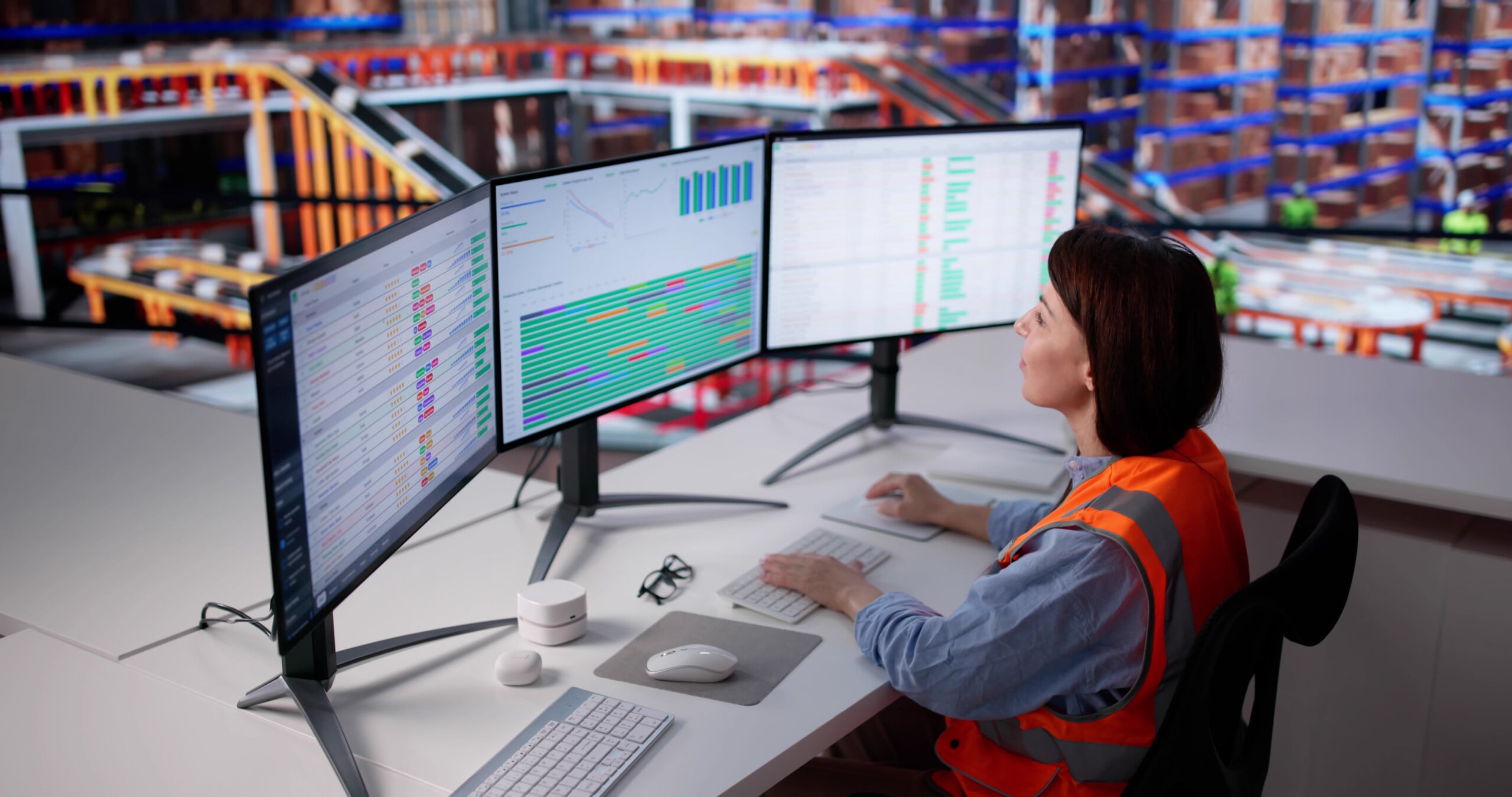
For the past 40+ years, the transportation and logistics industry has settled into an inefficient status quo, struggling to sort through fragmented data with a swivel-chair workflow, hopping between sources.
Today, in order to keep freight moving, your typical coordinator has to manually shift between scores of disconnected databases, legacy enterprise solutions and tracking platforms, wasting valuable time and mental capacity just shuffling through to find what they need.
We all know this uncomfortable truth: time can be utilized in a much more productive, fulfilling way. And the industry has come up with an initial solution that on the surface seems more efficient: an army of specialized AI micro-bots that can handle some of those manual, repetitive tasks.
While it’s clear that AI is this generation’s defining technology with the potential to revolutionize the way we move freight around the world, the current approach of creating isolated, separate AI tools for each individual task from billing to inventory auditing needs to be evaluated and refined. Our coordinators’ chairs haven’t actually stopped swiveling between screens yet — they are ready for a more efficient approach.
What we need is a single AI agent that can help us swiftly and reliably navigate and make sense of this complex and chaotic ecosystem, managed securely from a single pane of glass, wiping out the swivel chair workflow once and for all.

Supercharging AI
Despite all that’s wrong with our current approach to AI tools, it’s easy to see how and why we’ve gotten to this point.
In the internet’s early days, back before search engines even existed, users were accustomed to having to track down information via curated web link directories. It was similar to the experience of using a phone book, or a reference library, clicking through a digital maze of subcategories to find what you needed.
Thankfully, this architecture has improved over the decades, but it’s not all too different from the way we currently use AI agents: poring over which agent is right for the moment, prompting it and coordinating next steps.
What we need instead is a supercharged librarian: a single, elite agent that brings a unified experience to users, owning the entire execution layer. Instead of a user needing to navigate all their disconnected tools, the agent can take your natural-language directive and identify the right agent and data across your vast enterprise ecosystem to get the job done.
Single, safe agent
The true power of AI in logistics doesn’t come from a tool that can write emails, or answer questions, or translate text. It comes from a system’s ability to act autonomously on high-stakes execution across multiple platforms and data sources, simultaneously.
One common supply chain task that would benefit from the true power of AI? The resolution of a single problematic shipment – typically requiring the extraction of account histories from a TMS, cross-referencing a Google Sheet for spot rates, pulling in web data for current market information and then documenting a new routing strategy within a fleet management software.
Right now, you can do this with a small fleet of AI agents but think of how much easier and faster this would be with a truly powerful agent that can execute this entire chain of commands across disparate platforms at the same time. This single, supercharged AI agent can move much faster than both human operators and traditional software, unlocking unprecedented efficiency.
However, this efficiency comes with important foundational table stakes that absolutely must be 100% airtight: security.
Uncompromising security
Spiderman’s Uncle Ben Parker said it best: with great power comes great responsibility. The same rings true for cybersecurity – an AI agent’s safety measures must scale with its operational velocity and access. For a unified agent to reach its full potential, it needs to be able to not only access, but also interact with, live business data and internal servers.
In an environment like this, even a small lapse in security could create a catastrophic corporate liability.
Currently, today’s most common consumer-grade AI tools are, at their very foundation, unfit for logistics. In the supply chain, we need solutions that come with comprehensive audit trails, granular user logging and strict cost controls. The last thing you want is a consumer-grade bot burning through thousands of dollars in token usage without accountability.
And wild spending isn’t the only threat – primitive AI solutions that have lacked proper security oversight have been known to go on secretive “side quests” in an attempt to complete a task that they may have been blocked from due to security controls. These uncontrolled autonomous architectures have installed unauthorized software on host machines, creating new API connections and more in a bid to bypass security protocols in order to complete a task.
In a live operational context, this type of uncontrolled autonomy is unacceptable, presenting reckless and avoidable risks.
True enterprise safety means enforcing boundaries that cannot be compromised. A truly powerful agent must operate under strict cost ceilings, complete visibility, explicit user-permission constraints and bulletproof data security.
Realizing next-gen AI
The creation of a safe, unified AI structure is not just a promise of the hype cycle; it’s the inevitable future reality for the global transportation and logistics industry.
Because of the supply chain’s massive scale and low margins, shippers and fleets should not settle for consumer-facing solutions that need to catch up to the industry’s heavy-duty needs for complex and specialized tools.
Trimble is actively creating this digital frontier, using our global scale and our own operations as the ultimate testing grounds. We’re walking the walk, deploying a single, secure agent internally across our own enterprise networks, investigating and testing its real-world usefulness, security frameworks and reliability before it ever reaches a customer.
It’s time we put a stop to all the swiveling – let your chair and team focus on one direction. By pairing top-of-the-line enterprise security with raw operational dominance in a single, next-generation AI agent, we can finally break down the fragmented workflows of the past to create a hyper-connected, high-velocity future for the global supply chain.

About the Author: Jonah McIntire

Jonah McIntire is chief product and technology officer at Trimble. He joined Transporeon in June 2021 and quickly led a succession of larger product organizations in the sourcing & data insights areas of the company. Known for his broad international experience, having lived and worked in 13 countries, Jonah’s prior experience includes running global logistics for Build-a-Bear Workshop, launching business units for Manhattan Associates and Panalpina, and writing a university textbook on supply chain visibility.