By Matthew Gregory, Sales & Marketing Manager at The Cloud Awards.
We are well into a thrilling summer of sport.
Looking back, and at risk of re-opening some reader’s wounds (for which, I apologize!), we’ve had a wonderful mix of records broken, victory by the narrowest of margins, and some epic comebacks:
- The Boston Celtics winning a record 18th NBA championship
- India narrowly beating South Africa by 7 runs in the ICC T20 World Cup Final in Barbados
- Bryson DeChambeau coming back to pip Rory McIlroy to the (men’s golf) US Open
In all these tournaments, artificial intelligence has participated alongside the athletes and competitors to help them get over the line. DeChambeau recently revealed how he used AI to help perfect his golf swing, to help give him the edge. Technology has long been used within sport to help improve performance, prevent injury, and enhance the spectator experience – both in the stadium and at home – however the explosion of AI into the digital revolution has unlocked new opportunities for competitors, sports teams and governing bodies, and spectators.
The Olympics and Paralympics, arguably the highest-profile sporting events in the world, will also feature this summer. Ahead of the 2024 games in Paris, the International Olympic Committee (‘IOC’) became the first international sports organization to announce what it calls “a holistic approach to explore the great potential of AI”, in the form of the ‘Olympic AI Agenda’. The fact that this new agenda stands side-by-side with the IOC’s flagship strategic roadmap for the Olympic Movement (‘Olympic Agenda 2020+5’) symbolizes the importance with which the IOC places on AI’s future role in sports governance.
The Olympic AI Agenda crosses five ‘focus areas’. In this article we’ll dive a little deeper into each, assessing the opportunities and risks across the sporting world in general.

Focus Area #1: “Supporting Athletes, Clean Competition and Safe Sport”
In summary, this covers talent identification, performance analysis and tailored training regimes, improved refereeing/judging, injury prevention, recovery improvement, doping detection, and reduction/prevention of harassment and abuse.
Using data and technology to identify, analyze, and nurture talent has been commonplace across most sports for decades. However, the application of AI into these processes massively increases the volume and depth of work that can be carried out at great speed – enabling talent scouts, for example, to introduce more performance variables into their decision-making. Attributes less easy to calculate, such as leadership, resilience, and cultural fit within a sporting organization could be at risk of being overlooked if there is an overdependence on statistical performance data.
Human intuition versus the application of technology in refereeing has been a hot topic in the English Premier League (‘EPL’) recently. Although the introduction of innovations such as automated offside calling, thanks in part to AI, have resulted in statistically fewer mistakes by match officials being committed over the course of a season, the removal of a sense of human agency and ‘common sense’ has drawn criticism from supporters and sports club officials. One EPL club even raised a motion amongst its peers to scrap the use of some technology – specifically the Video Assistant Referee (‘VAR’) – from use in the EPL, arguing a small increase in accuracy was at odds with the ‘spirit of the game’.
Although this vote was unanimously lost, it highlights the importance of AI being used as an athlete (and referee/judge) support system remaining just that – a tool for improving human-driven processes, not a replacement.

Focus Area #2: “Ensuring Equal Access to the Benefits of AI”
This area centers on the democratization of AI through education, sharing best practice with other sports organization bodies, and equal access to data-based training plans for coaches worldwide.
In professional sports, teams with substantial financial resources are more likely to adopt advanced AI solutions. They can afford sophisticated data analytics, personalized training programs, and real-time performance monitoring systems, giving their athletes a significant competitive edge. Conversely, smaller teams, those in less wealthy leagues, or those that receive less funding, may struggle to access these technologies, widening the gap between the haves and have-nots.
To address this disparity, it is essential to promote initiatives that make AI tools more affordable and accessible. This could involve developing cost-effective AI solutions tailored for lower-budget teams or creating partnerships between technology companies and grassroots sports organizations. Furthermore, educational programs aimed at coaches and sports administrators can help demystify AI, ensuring they have the knowledge to implement and benefit from these technologies.
At the grassroots level, equal access to AI can foster greater inclusivity, enabling young athletes from diverse backgrounds to receive the same quality of training and injury prevention as their peers in more privileged settings. This can be instrumental in identifying and nurturing talent, ultimately enriching the overall sports ecosystem.
The IOC is well-placed to encourage the democratization of AI within sports given the wide range of governing bodies and jurisdictions operating within its network.

Focus Area #3: “Optimizing Olympic and Paralympic Games Operations with a Focus on Sustainability”
Here the IOC envision AI streamlining the operations for the games – including improving efficiency, reducing cost, and enhancing sustainability – from host city selection through to ongoing legacy.
AI’s capacity to analyze vast amounts of data and generate insights can significantly improve efficiency across multiple facets of the Games.
During the host city selection process, AI can assess and predict the potential success of candidate cities by analyzing factors such as infrastructure, environmental impact, and economic stability. By leveraging AI, the IOC can make more informed decisions, ensuring that chosen cities are well-equipped to handle the immense logistical and financial demands of hosting the Olympics. This data-driven approach can also help identify and mitigate risks, leading to smoother preparations and fewer unexpected challenges.
Olympic legacy has occasionally proven to be a double-edged sword where the lasting impact of the games on a host city (or country) may not have lived up to expectations. Both the 2004 Athens and 2016 Rio de Janeiro games have struggled with defining a mostly positive legacy – with disused and derelict facilities and economic issues arising in the aftermath. Smarter modeling powered by AI could help limit the impact of occurrences like these in the future.
Finally, AI’s potential in assisting the development of sustainable waste management systems and promoting eco-friendly practices among attendees and participants will help achieve this focus on sustainability.
Focus Area #4: “Growing Engagement with People”
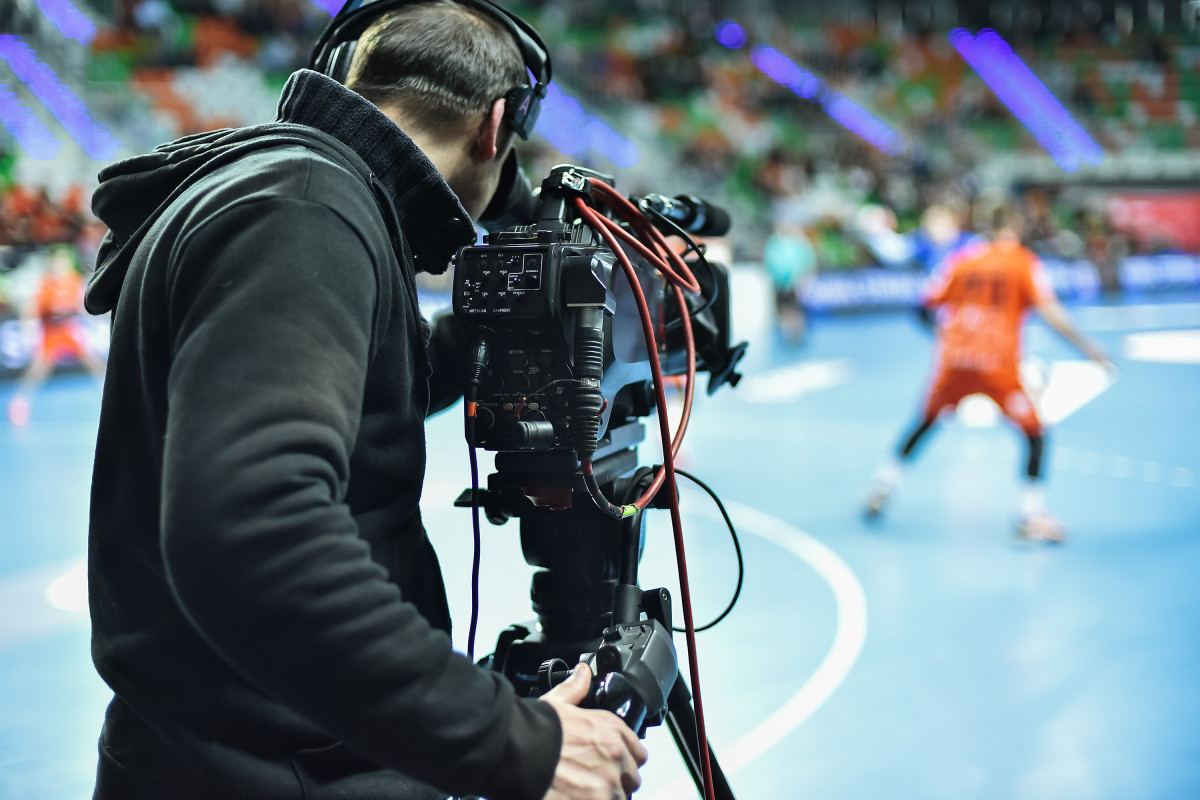
Focus area #4 turns its eyes towards broadcasters and spectators. The utilization of digital technologies to enhance spectator experience, both in-venue and at home, and identifying where AI can streamline production and broadcasting processes.
This integration of AI and digital technologies aims to make the Olympics more interactive, accessible, and immersive for a global audience.
AI can significantly enhance the in-venue experience by personalizing interactions and providing real-time information to spectators. For instance, AI-powered apps can offer spectators customized schedules, navigation assistance in and around the venue, and pushing instant replays or highlights to their devices. Additionally, AI-driven augmented reality (AR) can bring events to life, allowing fans to see detailed athlete stats, event histories, and immersive visual effects that enrich the live experience.
Paris 2024 is already set to feature some of these kinds of developments following a recent announcement with a partnership with Intel. Using AI to transform digital images of iconic moments into 3D models for display in the Olympic museum is likely to provide a particularly immersive experience for attendees, and help inspire the next generation of athletes.

Focus Area #5: “Driving Efficiency Across the Management of the IOC and Sport”
Like many other businesses and organizations worldwide, the IOC is looking for ways that AI can influence and improve their own processes and operational efficiency. This crosses finance processes, governance, HR, and data-driven decision making.
Our annual Market Report highlighted AI’s emergence in supporting and enhancing business processes across an organization, to help improve efficiency. AI can enhance resource allocation by identifying the most efficient ways to distribute funds, personnel, and materials. For example, AI can optimize logistics for events, ensuring that equipment and facilities are utilized effectively and sustainably. This not only reduces costs but also minimizes environmental impact, aligning with the IOC’s commitment to sustainability.
In the IOC’s case, making greater savings in the administration and operation of the games would enable them to invest in other areas for the betterment of sport, such as grassroots development.
The Olympics AI Legacy”
The fact that the IOC has created an Agenda to outline its AI strategy indicates the huge potential value and importance that technology is having across the sporting world. It feels like a turning point has arrived in the (what has on occasion been a fractious) relationship between sports and technology. The introduction of a clearly defined strategy in the application of AI into the broad church of the Olympics is a step in the right direction, with the organization setting the standard for other world sports governing bodies to follow.
About the Author: Matthew Gregory