By Eric Morehead, Director of Advisory Services at LRN Corporation. LRN Corporation were shortlisted for the ‘Best SaaS Product for BI, Analytics and Reporting‘ category at The 2025 SaaS Awards.
The landscape of ethics and compliance (E&C) is in constant motion, with regulations, guidelines, and best practices consistently changing.
Companies looking for data on program effectiveness are increasingly turning inward rather than relying on external guidance to manage risk and operate ethically. However, many are finding that their current tools and systems are simply insufficient.
A recent study from LRN Corporation, a leading provider of E&C solutions, highlights this trend and other issues regarding use of data for compliance programs. As part of its 2025 Global Study on E&C Program Maturity, LRN found that more than one-third of organizations still manage investigations using spreadsheets, and fewer than 30% deploy a cross-functional investigation team. In an era where employees are overloaded with information and responsibilities, automation and improved processes can guard against critical issues falling through the cracks.
Now more than ever, businesses must modernize, streamline, and connect their E&C systems. Without doing so, they risk falling behind: unable to respond quickly to new risks, and unprepared to meet increasing demands for transparency from stakeholders and regulators alike.
A telling example of the risks involved comes from the COVID-19 pandemic. In England, 16,000 COVID cases went unreported due to outdated technology. Public Health England set up an automated process to consolidate data for other government computer dashboards, but used a file format incompatible with the industry standard. As a result, crucial health data was misrepresented during a global crisis. The root cause? Poor oversight fueled by obsolete systems
This is just one example of the ways in which outdated systems and processes can render compliance ineffective. As companies continue to grow and expand, the amount of information they are required to process grows exponentially; yet, how we consume and explain this data hasn’t evolved. Often, organizations don’t realize they have a problem until their systems and processes fail.
Organizations must investigate best practices, modernize, and integrate their internal E&C systems to handle the increasing demands for information, to avoid critical oversights, and ensure transparency in an era of growing complexity.
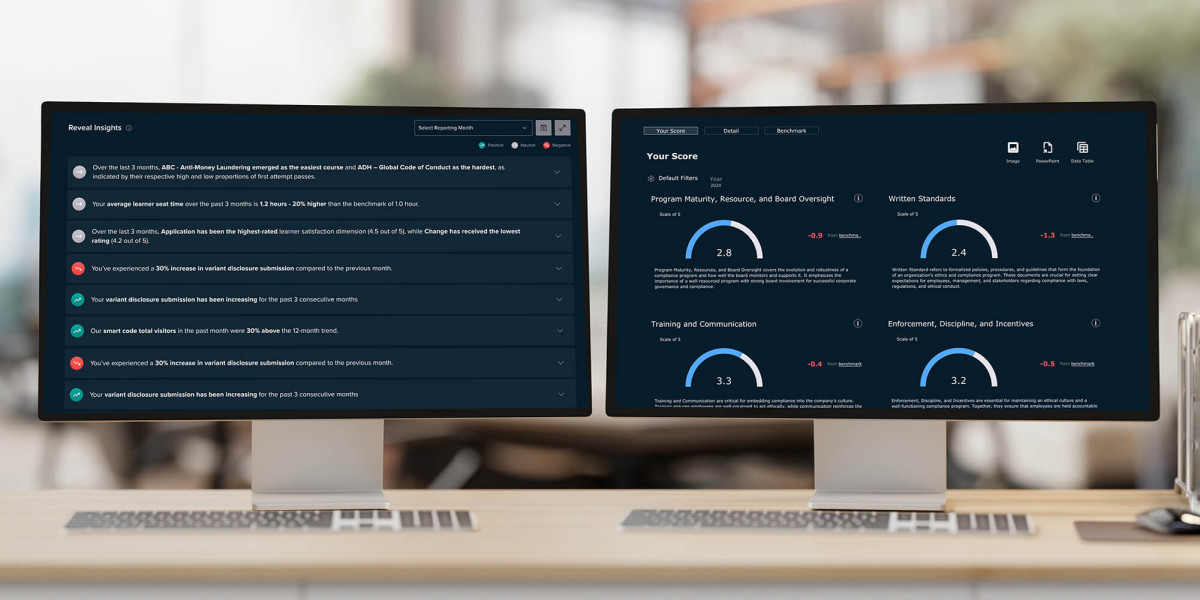
Volatility of ethics and compliance landscape
As compliance regulations tighten, enforcement becomes more rigorous, and stakeholder expectations continue to rise, companies face mounting pressure to stay compliant. Yet many organizations struggle to adapt.
According to LRN’s 2025 E&C Program Effectiveness Report, 64% of professionals cite outdated internal systems as a major challenge, and 59% point to complex regulatory environments as a persistent barrier. These realities reflect a broader shift: legacy compliance tools and processes are falling behind in a landscape that demands speed, adaptability, and transparency.
The challenge isn’t just technical—it’s cultural. The same report found a sharp divide between leadership and frontline perspectives: while 79% of executives say they make values-based decisions, only 37% of middle managers are perceived as doing the same. And when it comes to promoting ethical culture, less than half of Gen Z employees believe their managers hold themselves to the same ethical standards expected of others.
Outdated systems compound these issues. From LRN’s 2025 Global Study on E&C Program Maturity, more than one-third (35%) of organizations still manage investigations using spreadsheets, and fewer than 30% use cross-functional investigation teams. These manual approaches limit visibility, delay responses, and make it harder to demonstrate transparency to stakeholders.
The case for modernization
To keep pace, organizations must shift from a reactive, manual compliance approach to a modern, integrated one. That means:
- Eliminating data silos by connecting systems across functions
- Automating routine compliance tasks to reduce delays
- Providing real-time insights for faster, better-informed decisions
By investing in modern platforms and rebuilding how they collect, analyze, and act on compliance data, companies can reduce risk, improve accountability, and build stronger trust—internally and externally. In today’s complex environment, compliance isn’t just about following the rules; it’s about being agile, credible, and prepared for what’s next.

Making data work for compliance
Organizations are collecting more data than ever—but collecting it isn’t the same as understanding it. Poor data quality costs businesses an average of $15 million per year, and a major source of that problem is inaccurate or disorganized internal data.
In compliance, this becomes a serious risk. If companies want to understand their culture and minimize exposure, they need to track performance, stay current with regulations, and monitor changes to compliance standards. Yet, LRN’s 2025 E&C Program Effectiveness Report found that fewer than half of organizations use analytics to identify risk trends or training impact, and many still rely on basic metrics, such as training completion rates, rather than meaningful outcomes, like behavior change or misconduct reporting. This underuse of data shows a missed opportunity—and a clear need for improvement.
One major challenge is the volume of “dark data”—information that is collected but never used. At least 20% of company data is estimated to be redundant, outdated, or trivial. These forgotten files can include sensitive or personal information, creating risk for compliance and security. Dark data also clutters systems and hinders decision-making. The problem is worse in companies that still rely heavily on paper-based records or outdated storage, where information is difficult to search or secure. Teaching employees how to identify and properly handle sensitive information is key to reducing this risk.
As data volumes continue to grow, the real challenge is no longer access—it’s clarity. Companies need organized, up-to-date systems that help them find the right data, analyze it in real time, and act on it with confidence. To succeed in today’s compliance landscape, data can’t be an afterthought—it has to be a strategic advantage.
Enhancing safety and job satisfaction
Workforce challenges are not just about knowledge loss; they also involve safety and employee retention. Field inspections are inherently risky, requiring workers to operate in hazardous conditions, from high-voltage lines to remote, weather-impacted regions.
AI-powered SaaS reduces the need for on-site inspections by enabling virtual inspections through drones and high-resolution cameras. Maintenance teams can review data safely from a central location, intervening only when physical repairs are necessary. This approach:
- Minimizes exposure to hazardous environments.
- Reduces physical strain, which can improve long-term job satisfaction.
- Allows experienced workers to focus on higher-value tasks like strategic planning and training.
RePower, for example, reported improved team morale after transitioning to AI-supported inspections. By automating data collection and analysis, they streamlined inspection processes, increased coverage, and reduced manual workload, allowing teams to concentrate on proactive maintenance planning.
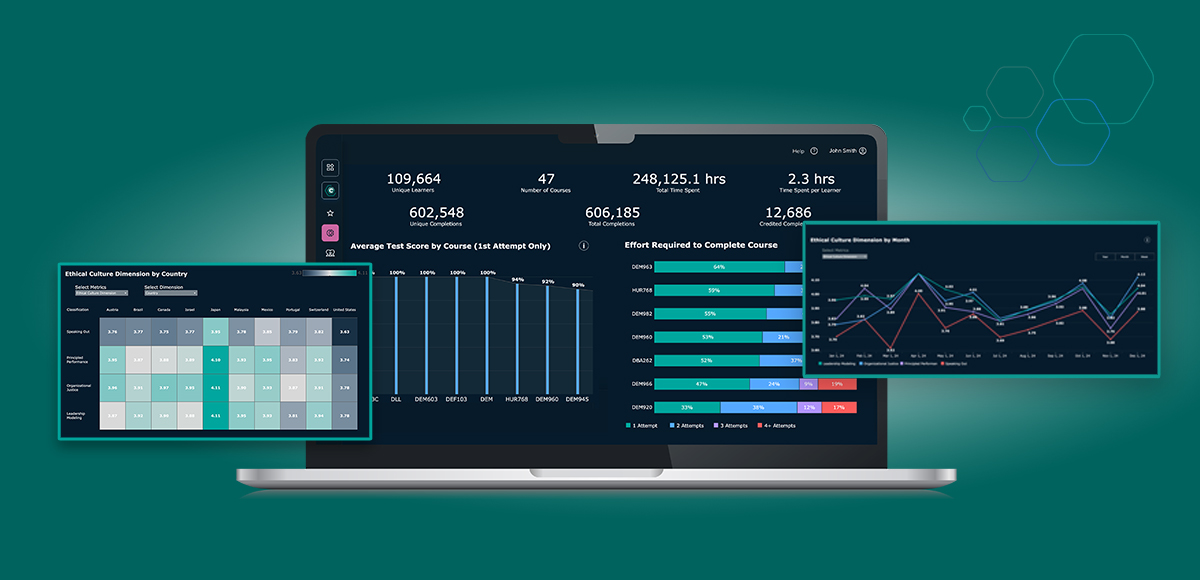
Strengthening compliance through smarter internal checks, and external benchmarking
You can’t fix what you don’t understand. And right now, many organizations lack the insight they need to identify risks before they become problems.
According to LRN’s 2025 Global Study on E&C Program Maturity, 25% of organizations say they lack the resources to conduct proper compliance audits, and only 37% conduct one or more internal compliance audits per year. This means that the majority of companies may be making decisions without a full understanding of the state of their compliance systems.
The ability to understand what’s happening inside your organization—and how it compares to others—is essential. Benchmarking and employee surveys are two of the most powerful tools companies have to achieve this.
Yet many programs still underuse them. According to LRN’s E&C Program Effectiveness Report, high-impact ethics and compliance programs are 1.8x more likely to use benchmarking data to assess performance and make decisions than medium-impact programs. These organizations also rely more heavily on employee feedback and trend data—not just to meet regulatory requirements, but to drive culture, accountability, and continuous improvement.
Surveys, in particular, offer critical insights. But to be effective, they must go beyond surface-level sentiment. LRN’s 2025 Global Study on E&C Program Maturity found that while 76% of organizations conduct annual culture assessments, fewer than 31% include E&C performance in formal reviews, and only a minority consistently track key signals like misconduct trends or organizational justice. This gap suggests that while some organizations collect sentiment data, they may not be utilizing it strategically.
Benchmarking can also help fill the measurement gap. By comparing internal findings to peer organizations, companies can identify blind spots, highlight strengths, and prioritize actions. High-performing programs are also 1.5x more likely to benchmark their E&C training against other companies, for example, using those insights to refine content, format, and delivery.
A new standard for compliance
The pressure on compliance teams is mounting – from rising regulatory complexity to the sheer volume of data generated by employee reports, investigations, and shifting legal standards. Legacy systems simply can’t keep up. Without integrated tools to surface what matters, companies risk missing red flags or falling short of stakeholder expectations.
Updated tools, revised processes, and automated systems help filter signal from noise, making it easier to spot patterns, track cultural shifts, and uncover hidden risks before they escalate. As enforcement becomes more data-driven, organizations that embrace real-time tools will be better prepared not only to stay compliant but also to lead with integrity.
The future of compliance will belong to companies that can quickly interpret information, act decisively, and adapt proactively – turning data into a driver of resilience and ethical performance.
About the Author: Eric Morehead